Course Design:
Introduction to Photography
Designed Fall 2018
Introduction to Photography is a freshman or sophomore 100-level art studio course. Students typically enroll in this course for:
non-major taking a humanities credit,
major or non-major interested in pursuing art as a degree, or
community member interested in learning more about photography.
This course was designed as an online course, as the photography taught within the course was strictly digital.
Art 1117 Outcomes and Objectives
The information in this section highlights the Course Learning Outcomes and Student Learning Objectives for Introduction to Photography.
These outcomes are referenced in the assessment process.
Course Learning Outcomes
A written statement that reflects what the learner will be able to do as a result of participating in the course/ education. (Essential Questions)
Capture digital pictures that demonstrate
understanding of photographic equipment
and techniques.
Compose images that display knowledge of
compositional techniques, thought, effort,
and care.
Select appropriate editing techniques to
enhance photographs and justify editing and
compositional choices within images
Critique and interpret photographs using
vocabulary of art.
Student Learning Objectives
Statements that define the expected goal(s) of an educational course/ activity. “I can” statements. (Knowledge & Skills)
By the end of this course students should be able to…
Explain the basic principles and functions of a digital camera.
Demonstrate editing and manipulating files in Photoshop and/or Lightroom.
Illustrate the principles of design and create visually engaging compositions.
Demonstrate ability to upload files to digital platform and engage in digital critiques.
Understand the context of photography within art history and the major movements of photography in history.
Major Assessments (online)
The “Major Assessments of Introduction to Photography” accordion highlights both the assessments and general layout of the course. Each module is broken down into 4 categories:
Module Outcomes,
Assessments,
Type of Assessments and Module Learning Outcomes,
and Student Learning Outcomes addressed in the Module.
Within the course itself, I provide a variety of approaches to assessment, including free response questions, performance tasks with rubrics, multiple choice and short answer quizzes, art projects, and a research paper. At this point in the Instructional Design process, I am trying to determine:
what the general layout of the course looks like in terms of structure, and
(what types of AUTHENTIC assessments assist the learner to answer the essential questions of the course and reinforce the student learning outcomes.
Please note: I have included a variety of example modules from the redesign - There are 14 modules in the published version of the course. For additional module content, please ask for examples.
-
Module Outcomes:
Converse with classmates and faculty.
Identify topics covered in the course and course expectations.
Assessments
Discussion Board #1 – Self Introduction Video
Quiz #1 – Syllabus Quiz
Type of Assessment(s) & MLO’s
Free Response Question - 1
Multiple Choice Quiz- 2
SLO’s addressed in Module
N/A (introduction)
-
Module Outcomes:
Demonstrate understanding of the basic features of a digital camera.
Manipulate images with editing tools such as cropping, adjusting brightness, saturation, and contrast.
Relate the elements of design to photography and explain how they can be used to make a photo eye-catching.
Assessments
Art Project #1 – Photo Elements Scavenger Hunt
Discussion Board #2 - Elements Photography Response
Type of Assessment(s) & MLO’s
Performance Task w/ Rubric - 1, 2
Reflection Prompt – 1, 3
SLO’s addressed in Module
1, 2, 3, 4
-
Module Outcomes:
Demonstrate understanding of the basic features of a digital camera.
Manipulate images with editing tools such as the spot healing brush, filters, and sharpening.
Explain how to use composition to make an artist shot intentional.
Assessments
Art Project #2 - Composition Scavenger Hunt
Quiz #2 – Composition (m/c)
Discussion Board #3 - Composition Research
Type of Assessment(s) & MLO’s
Performance Task w/ Rubric - 1, 2, 3
b) Multiple Choice Quiz – 1, 3
c) Reflection Prompt - 3
SLO’s addressed in Module
1, 2, 3, 4
-
Module Outcomes:
Explain the functions of ISO, Aperture, and Shutter Speed on the digital camera.
Demonstrate appropriate selection of mode on camera and correct use of ISO, Aperture, and Shutter Speed.
Arrange photographs and text in a digital collage using editing tools, for the purpose of display.
Assessments
Art Project #3 & 4
Quizzes # 3 & 4
Discussion Boards #4 & 5 – Aperture Discussion & Shutter Speed Discussion
Type of Assessment(s) & MLO’s
Performance Task w/ Rubric - 1, 2, 3
b) Multiple Choice Quiz – 1, 2
c) Reflection Prompt – 1, 2
SLO’s addressed in Module
1, 2, 3, 4
-
Module Outcomes:
Design original photographs that showcase differences in scale.
Capture photographs that have appropriate lighting for the project.
Create images by using moving, manipulating, and placing an image in Photoshop.
Assessments
Art Project # 6 – Giants and Fairies
Quiz #6 – Lighting and Flash
Discussion Board #7
Type of Assessment(s) & MLO’s
Performance Task w/ Rubric – 1, 2, 3
Multiple Choice Quiz - 1
Reflection Prompt – 1, 3
SLO’s addressed in Module
1, 2, 3, 4
-
Module Outcomes:
Describe the reasons why a photographer would use macro photography.
Manipulate photographs taken into a “search and discover” style book.
Research the visual aesthetics of a children’s book.
Assessments
Art Project #10 – Macro/ Book
Quiz #10 – Macro
Discussion Board #11 - Children’s Book Research
Type of Assessment(s) & MLO’s
Performance Task w/ Rubric - 2, 3
See Research Paper MLO’s
Written Response Quiz – 1, 3
SLO’s addressed in Module
1, 2, 3, 4, 5
-
Module Outcomes:
Research a photographer influential to the development of the field.
Write a research paper on the researched photographer, analyzing famous techniques and artworks.
Appropriate historical photographs using a contemporary viewpoint.
Assessments
Paper #1 – Photographer Research Paper
Art Project #12 - Photographer Research Project
Discussion Posting # 13 – Photographer Research Project
Type of Assessment(s) & MLO’s
Performance Task w/ Rubric - 1, 2, 3
Research Paper – 1, 2
Reflection Prompt – 1, 2, 3
SLO’s addressed in Module
2, 3, 4, 5
-
Module Outcomes:
Build a final portfolio that contains the strongest images student has taken over the semester.
Critique photography skills of self and peers through discussion.
Justify development of photography skills throughout the semester.
Assessments
Final – Final Portfolio
Paper #2 – Portfolio Self-Critique
Discussion Board # 15 – Self-Reflection Response
Type of Assessment(s) & MLO’s
Performance Task w/ Rubric – 1, 2, 3
Self-analysis Paper – 2, 3
Reflection Prompt – 1, 2, 3,
SLO’s addressed in Module
2, 3, 4
Examples of Learning Materials & Assessments

Example #1 Canvas Layout: Project – Based Learning Assignment & Rubric Final Portfolio Audience: Freshman, Sophomore and non-traditional students enrolled in photography, primarily nonmajors but scattered throughout the United States. For this assignment, students will create a portfolio using 20 of their best photographs they have taken this semester.
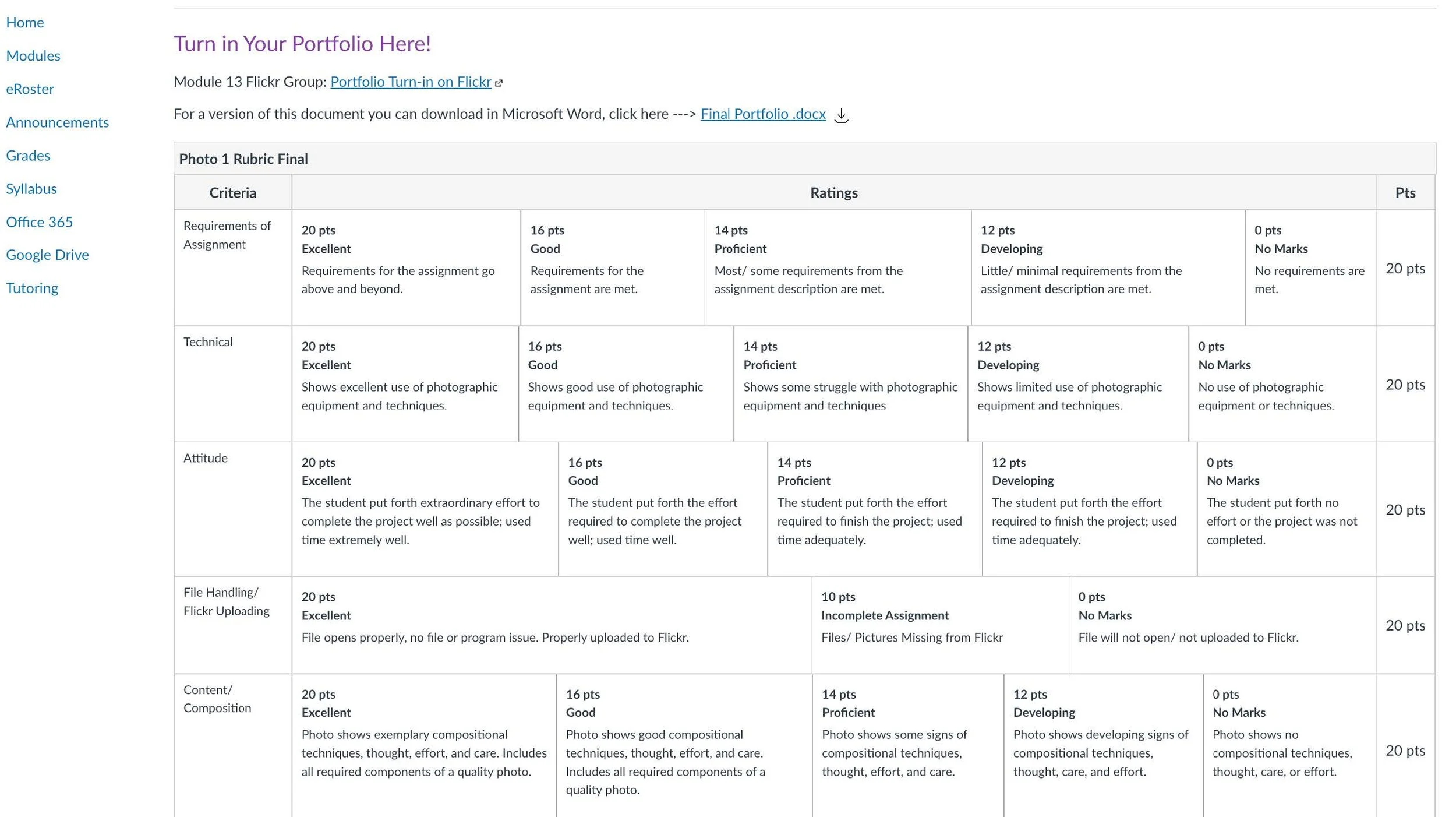
Rubric for Final Portfolio Created in Canvas

Example #2 Canvas Layout: Project – Research Paper Prompt: You will research a professional and influential photographer of your choice. You can choose from the list below (under the photographer’s section – I have listed 25 as a place to start!), or pick a significant photographer of your choice.

Paper Objectives: Your paper will answer the following questions. Example of key questions is shown.

Rubric for Research Paper Created in Canvas
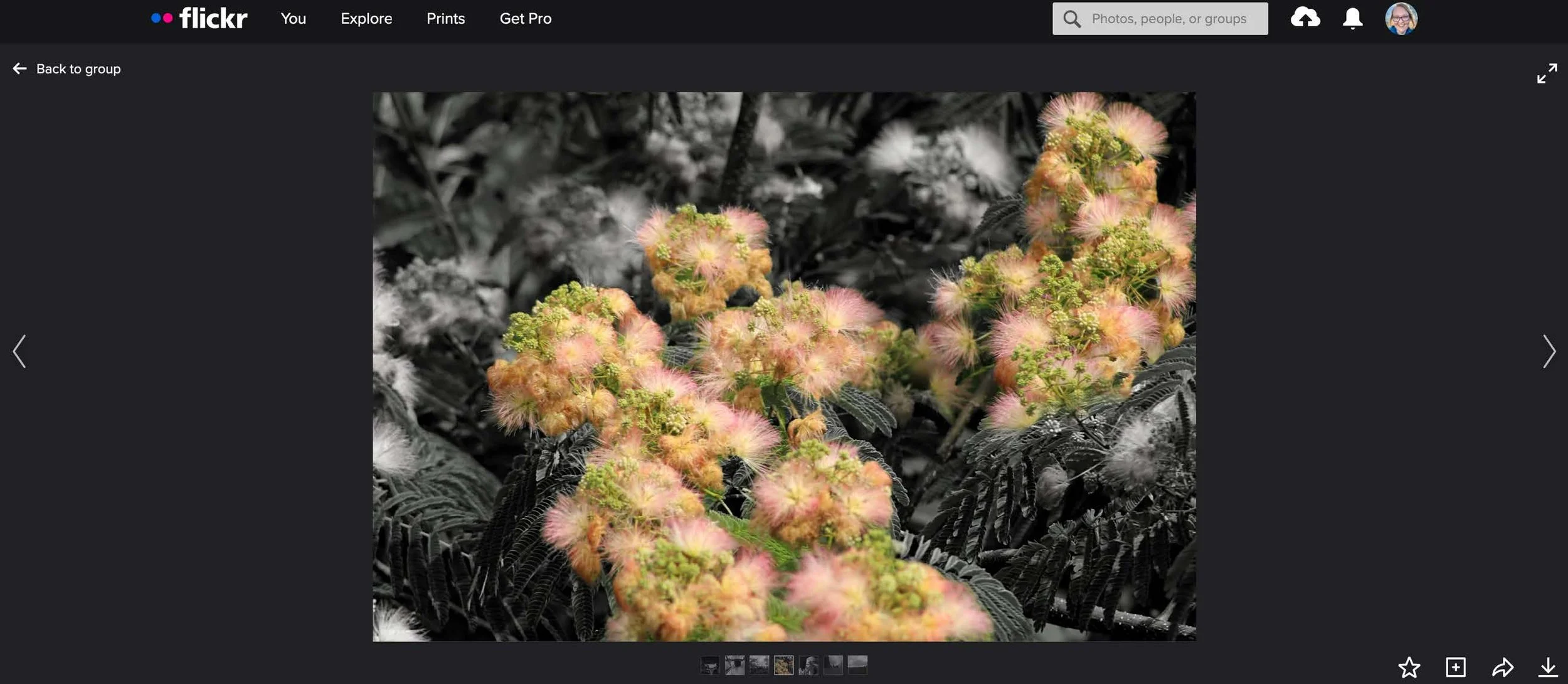
Example #3: Skills Demonstration “Quiz” Quiz Prompt: Black and White Transformation Images (Practice application of skills): Pick two existing pictures you’ve taken and turn them into black and white in Photoshop OR take two existing pictures and use selective color on them in Photoshop.